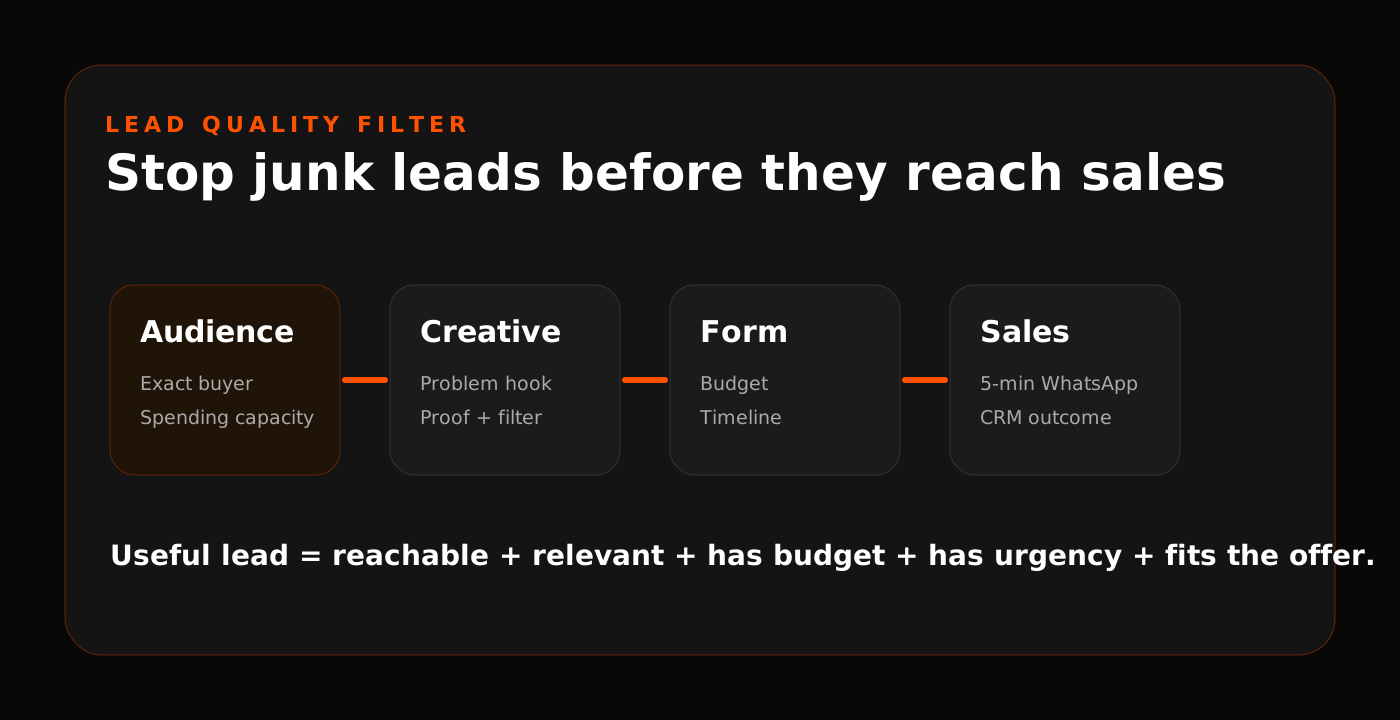
Quick answer: Cheap leads that never answer are not cheap — they are the most expensive traffic you can buy, because you pay for the click and then pay again in wasted sales time. The fix is adding friction on purpose: qualifying questions, better offers and stricter optimisation events, which raises cost per lead and raises revenue at the same time.
Every business owner learns this the hard way: the campaign that produces ₹30 leads feels like a win until the sales team reports that nobody picks up, nobody remembers filling the form, and the few who answer have no budget. Here is why it happens and exactly how to fix it without killing your volume completely.
Why cheap leads are usually bad leads
Meta optimises for whatever you ask it to. If you ask for form-fills at the lowest cost, it finds the people most likely to fill forms — and the people who fill forms easily are, by definition, the people who fill everyone's forms. Serial enquirers, curiosity clickers, people tapping through with no intent. The platform is not broken; the instruction was.
Instant forms make it worse: pre-filled name and phone number mean a lead can be "generated" in two taps by someone who will not remember your brand in an hour.
Fix 1 — Add friction on purpose
This feels wrong and works every time. Add two or three qualifying questions to the form: budget range, timeline, city or ownership status. Volume will drop 30–50%. Answer rates typically double or better. You are not paying for fewer leads — you are paying for the same buyers minus the noise.
For high-ticket offers, replace the instant form with a landing page entirely. A person who reads a page and then fills a form has invested attention; a person who tapped twice has invested nothing.
Fix 2 — Change what the ad promises
"Free consultation" attracts freebie collectors. "Site visit for 3BHK flats ₹80L–₹1.2Cr in [area]" attracts buyers, because the price band itself qualifies the reader. Put the disqualifier in the ad — ticket size, service area, minimum project — and let the wrong people scroll past. Every wrong person who does not click saves you money twice.
Fix 3 — Optimise for a deeper event
If your CRM can send data back, stop optimising for "Lead" and start optimising for "Qualified Lead" or "Appointment Booked". Feed those outcomes back to Meta through the Conversions API, and the algorithm starts hunting for people who look like your buyers, not your form-fillers. This single change is the difference between an account that gets worse as it scales and one that gets better.
Fix 4 — Answer faster than everyone else
Some "bad" leads are good leads that went cold. Check your median time from form to first contact. Over five minutes in working hours, and lead quality problems and follow-up problems become impossible to tell apart. Put an automatic WhatsApp or SMS response within two minutes in front of every campaign before blaming the traffic.
How to tell which fix you need
| Symptom | Most likely cause | Start with |
|---|---|---|
| Leads never answer any call | Wrong audience or serial form-fillers | Fix 1 + Fix 3 |
| Leads answer but have no budget | Ad promise attracts the wrong intent | Fix 2 |
| Leads say "I forgot I enquired" | Slow follow-up | Fix 4 |
| Quality collapsed after scaling | Optimisation event too shallow | Fix 3 |
A real example
For a Mumbai premium builder selling ₹2–3 crore homes, we deliberately ran cost per lead up to ₹69.44 — expensive by Indian real-estate standards — by qualifying hard inside the form. 104 leads came through, and they were the kind a luxury sales team can actually work. The cheaper version of that campaign existed; it just would not have sold flats.
FAQs
Won't friction kill my volume?
It will cut volume, usually 30–50%. If your close rate doubles, you make more money from fewer leads and your sales team stops burning out. Judge on revenue per campaign, not on lead count.
What is a good cost per lead?
The one your unit economics can afford after close rate. A ₹500 lead closing at 10% on a ₹2L service is excellent. A ₹40 lead closing at 0.5% is a loss. There is no universal number.
Instant forms or landing pages?
Instant forms for lower-ticket, high-volume offers with fast follow-up. Landing pages for anything high-ticket or considered. When in doubt, test both against cost per qualified lead, not cost per lead.
Cheap leads are not the target. Qualified leads are.
Ask MaxLeadz to check where your lead quality is leaking.