Quick answer: When Facebook Ads spend money but sales do not arrive, the cause sits in one of five places: the numbers you are reading are wrong, the ad reaches people who cannot buy, the offer is not worth the click, the page loses the buyer, or the follow-up is too slow. Check them in that order — checking out of order wastes weeks.
This is the most common message we receive: "Ads are running, money is going, Meta shows results, but my bank account disagrees." It feels like the platform is cheating you. In most audits, the platform is fine — the system around the ads is broken. Here is how to find where, step by step, in plain language.
Step 1 — Prove your numbers are real before trusting them
Open Meta Events Manager and look at your Purchase or Lead event count for the last 7 days. Now open your actual order system — Shopify, WooCommerce, your CRM, or even your order diary. Compare the two numbers.
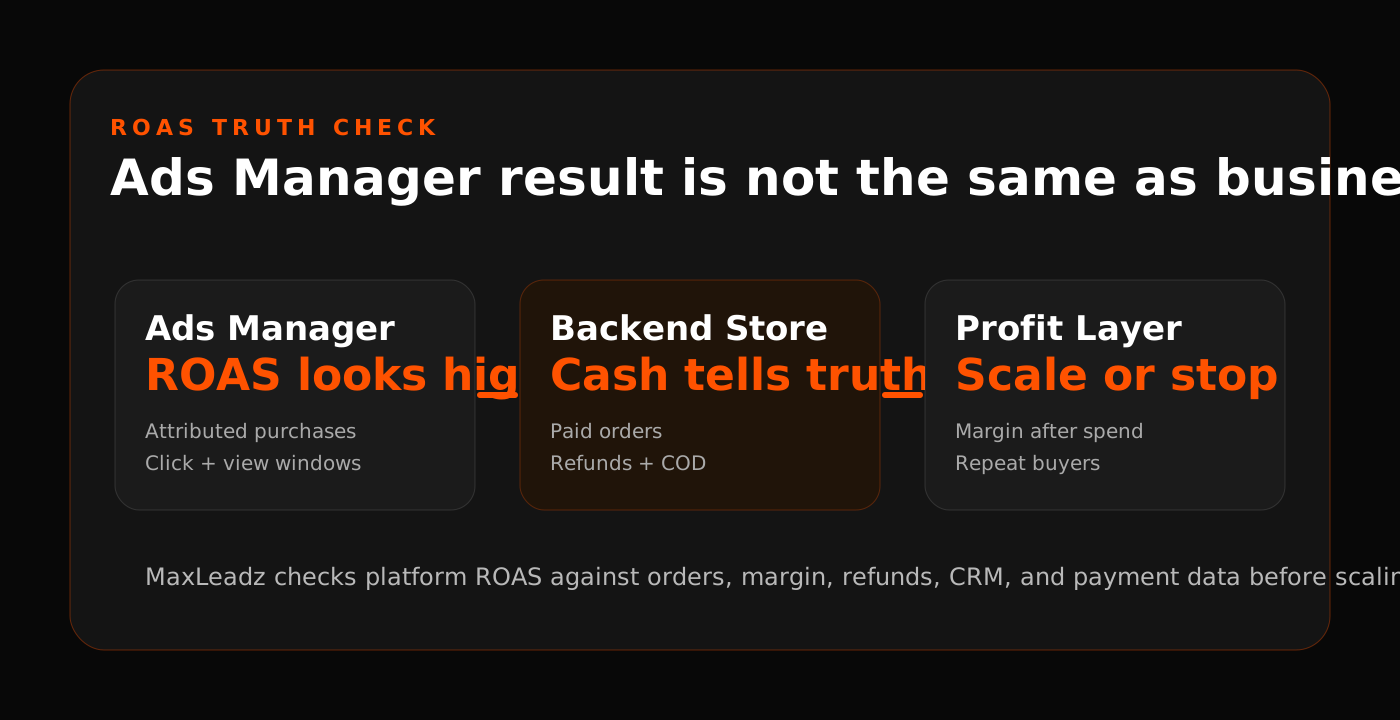
If Meta shows 40 purchases and your store shows 22, you have a tracking problem, and every decision you have made on that data was made on fiction. The usual causes: the Pixel and Conversions API firing the same event twice without deduplication, the purchase event firing on the payment page instead of the thank-you page, or a test event that was never turned off.
Fix tracking first. There is no point optimising an account whose scoreboard is wrong.
Step 2 — Check who the money is actually reaching
Pull your last 50 leads or buyers and score them honestly: could this person afford the product? Did they ever reply or answer? If more than half were never realistic buyers, your ads are winning the wrong auction — cheap clicks from people who click everything.
The tell-tale sign: your cost per lead looks excellent and your sales team is furious. Cheap and wrong is more expensive than costly and right, because you pay Meta once and your team's time twice.
Step 3 — Ask whether the offer deserves the click
Take your ad and show it to someone who does not work in your business. Ask two questions: "What exactly do I get?" and "Why should I act today instead of next month?" If they hesitate on either, so does your market.
"Free quote", "best quality", "premium service" are not offers — every competitor says the same words. A real offer is specific, time-bound and risk-reduced: what they get, by when, and what protects them if it goes wrong.
Step 4 — Watch what happens after the click
Open your landing page on a cheap Android phone on mobile data — not your office WiFi. Time it. If it takes more than three seconds, a large share of your paid clicks never see the page at all. Then check message match: does the page headline repeat the exact promise the ad made? If the ad says one thing and the page opens with something generic, the buyer assumes they are in the wrong place and leaves.
Also check the page conversion rate: visitors divided by leads or orders. Most working lead pages sit between 2% and 5%. If yours is below 1%, the page is where the money leaks — not the ad.
Step 5 — Measure your speed to lead
For lead-based businesses this is the silent killer. Find the median time between a form submission and your first call or message. If it is more than five minutes during working hours, this is very likely your biggest single problem. A person who enquires at 9pm and is called at 11am the next day has already spoken to your competitors.
The fix does not need more ad budget — it needs an automated first response within two minutes (WhatsApp or SMS), and a call-back rule your team actually follows.
What NOT to do while diagnosing
- Do not raise the budget — a broken funnel with more fuel just burns faster.
- Do not duplicate the campaign "for a fresh start" — you reset learning and learn nothing.
- Do not change five things at once — you will never know which one worked.
- Do not judge any change in less than 3–4 days of stable data.
A real example of this exact problem
A footwear e-commerce brand came to us spending ₹50,000–₹60,000 per month with products priced ₹3,500–₹4,000 at roughly 25% margin. Meta showed activity; profit did not follow. The fix was not new audiences — it was reconciling reported purchases against real orders, tightening the purchase event, and rebuilding around cost per purchase that protected margin. Result: 499 tracked purchases at ₹183.34 each in the visible account, an estimated 19x–21.8x ROAS, and the account scaled past ₹50L in sales across accounts. Same platform. Fixed system.
FAQs
How much should I spend before judging results?
Enough for roughly 50 conversions on your main event — below that, the algorithm is still learning and the data is noise. For most accounts that means at least 2–4 weeks at a steady budget.
Is it my targeting?
Less often than you think. On accounts we audit, tracking and offer problems outnumber targeting problems roughly four to one. Check targeting third, not first.
Meta shows sales but Shopify does not. Who is right?
Your store is right. Meta's attribution window claims credit for sales that may have happened anyway, and duplicate events inflate the count. Reconcile monthly and treat backend revenue as the truth.
Want Utsav to check your offer and funnel?
Get a free growth audit before spending more.