If results dropped after a budget increase, stop making additional rapid changes. Compare the stable period with the scaled period by spend, CPM, CTR, conversion rate, CPA, qualified lead rate, revenue and margin. Restore control at a sustainable spend level, refresh creative or improve the funnel, then test smaller documented increases based on marginal profitability.
Scaling is not multiplication. A campaign that produces three profitable sales at a small budget has not proved it can produce twelve sales at four times the spend. Increasing budget asks Meta to find more opportunities, often outside the original high-intent pocket. The business must have enough creative, audience, inventory and conversion capacity to support that expansion.
Where did performance break after scaling?
| Metric change | Likely bottleneck | Action |
|---|---|---|
| CPM rises, CTR stays stable | More expensive auction inventory | Judge CPA and profit; widen placements carefully |
| CTR falls and frequency rises | Creative fatigue or weaker audience response | Launch fresh hooks and formats |
| Clicks stable, page conversion falls | Lower-intent marginal traffic or page mismatch | Segment landing-page behavior and strengthen proof |
| Leads rise, qualified rate falls | Volume expanded faster than buyer quality | Improve qualification and CRM feedback |
| Orders rise, profit falls | Marginal CPA, discounts, RTO, refunds or fulfilment cost | Scale against contribution margin and MER |
Seven-step recovery plan
- Freeze the edit cycle. Record the last stable date, budget and structure. Multiple reactive changes destroy the comparison you need.
- Compare stable and scaled windows. Use enough days to reduce one-day noise and compare backend revenue, not only Ads Manager attribution.
- Find the broken stage. Delivery, click, page, lead quality, checkout, sales or fulfilment require different fixes.
- Return to a controllable spend level. If the campaign became uneconomic, reduce exposure while keeping enough data to diagnose. Do not repeatedly switch it on and off.
- Add creative capacity. Scaling the same small group of ads can exhaust response. Test new angles, proof and formats before demanding more volume.
- Improve marginal conversion. Faster pages, clearer offers, better follow-up, higher AOV and lower RTO can support more spend even when auction costs rise.
- Scale in measured steps. Use a documented increment and decision window appropriate to campaign volume. Continue only if marginal CPA and profit remain acceptable.
Why platform ROAS can look fine while scaling hurts the business
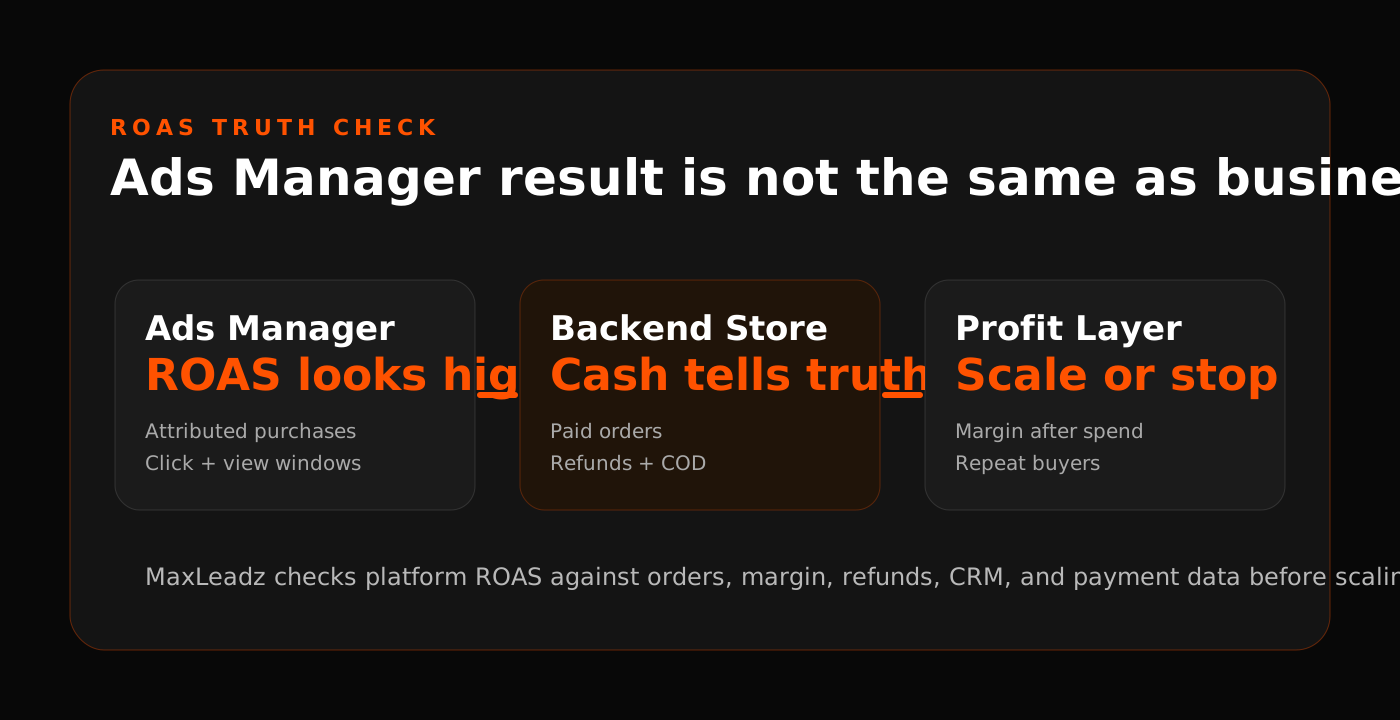
Attribution can credit orders that would have happened through another channel, while returns, cancellations, COD rejection, payment fees and product margin sit outside Ads Manager. Track MER, contribution margin and cash collected. For lead generation, track qualified rate, booked calls, show-ups and sales rather than total form count.
Research basis and official reference
Scaling problems are a recurring theme in advertiser communities, including reports of campaigns weakening after large budget jumps. Those reports are case observations, not a guaranteed rule or fixed percentage. See a 2026 budget-scaling discussion, a Learning Limited scaling discussion, and Meta Business Help Centre.
Frequently asked questions
Why did Meta Ads stop working after I increased budget?
The campaign may have expanded into less efficient auctions, exhausted creative, reset delivery stability or exposed a funnel limit that was hidden at lower volume.
Should I immediately reduce the budget?
If the campaign is materially unprofitable, regain control, but avoid repeated same-day changes. Compare stable and scaled periods and identify where performance broke.
What percentage should I increase Meta Ads budget?
No percentage works universally. Use an increment that your conversion volume and margins can evaluate, then continue only when marginal results remain profitable.
Is duplicating a winning campaign the best way to scale?
Not automatically. Duplication can create overlap and split learning. Choose a scaling method based on account structure, audience, creative capacity and measurement.
Need a scaling plan based on profit rather than hope?
MaxLeadz reviews campaign economics, tracking, creative capacity, funnel conversion and backend revenue before increasing spend.